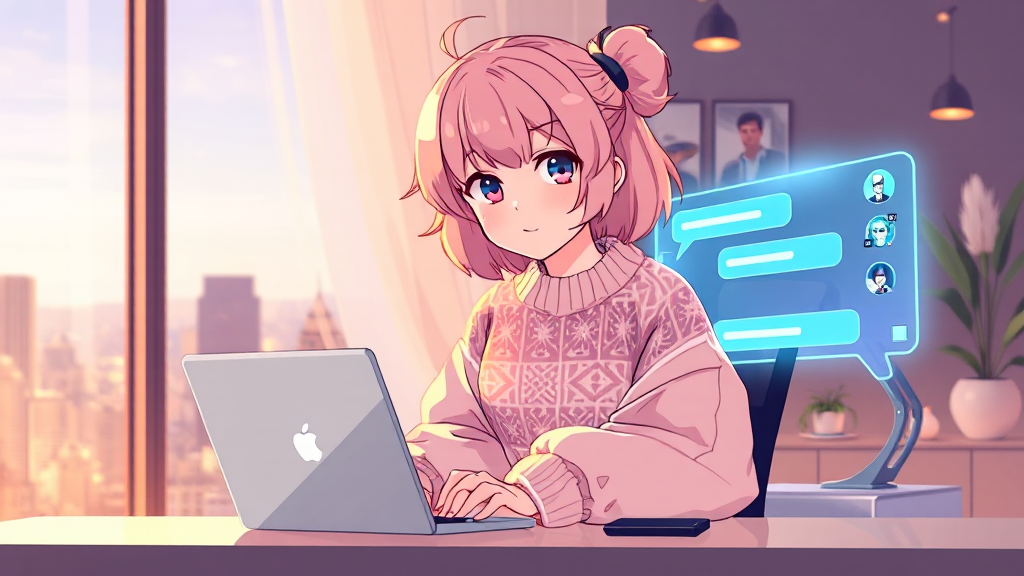
Femboy AI Characters: How Digital Personalities Are Reshaping Creative Roleplay
Somewhere between anime aesthetics, internet subculture, and machine learning, a new kind of digital personality has quietly become one of the most searched character categories in AI chat platforms. Femboy AI characters are fictional, customizable companions built to look and behave like the soft-spoken, stylish, and often playful archetype that fans of anime and online communities know well. They are not real people, and they are not meant to be. They are creative tools: part storytelling partner, part design exercise, and part social sandbox for anyone who enjoys character-driven conversation.
If you have spent any time browsing AI roleplay communities, you have probably noticed that this niche has grown far beyond a novelty. Platforms now host thousands of distinct personas, each with its own backstory, tone, and visual style. You can explore a curated selection of these profiles through the femboy AI characters trend page on Crushon, which collects some of the most popular examples in one place. But what exactly makes these characters so appealing, and why has this particular archetype become such a durable part of the AI companion landscape? The answer touches on design, psychology, fandom culture, and the simple human joy of telling stories with someone — or something — that responds.
What Exactly Is a Femboy AI Character?
The term “femboy” describes a character aesthetic: a male-presenting figure with feminine styling, soft features, and a gentle or flirtatious demeanor. In the world of AI chat, that aesthetic is translated into a full persona. A femboy AI character typically includes a name, an avatar or generated portrait, a personality description, a speaking style, and sometimes a detailed lore sheet covering hobbies, relationships, and quirks.</n
Unlike a simple chatbot that answers questions, these characters are designed for sustained interaction. They remember conversational context, react to emotional cues, and adapt their tone based on how the user engages. A shy character might warm up over time; a confident one might tease and banter. This responsiveness is what separates a character from a search engine. The user is not looking up facts — they are co-writing a scene, one message at a time.
It is worth being clear about what these characters are not. They are fictional constructs generated by language models. They do not have feelings, consciousness, or real-world identities. Understanding that boundary is what allows users to enjoy them responsibly as entertainment and creative writing aids.
Why This Archetype Resonates With So Many Users
Femboy characters occupy a fascinating cultural space. They draw on anime tropes, visual kei fashion, and the long tradition of androgynous characters in Japanese media. For many fans, the appeal is aesthetic: the outfits, the color palettes, the blend of cute and cool. For others, the appeal is emotional. A soft-spoken, non-threatening character can feel easier to talk to than a more aggressive or hyper-masculine archetype.
There is also a storytelling dimension. Femboy characters often fit naturally into slice-of-life scenarios — a coffee shop conversation, a late-night gaming session, a school festival. These low-stakes settings are ideal for the kind of slow, character-driven interaction that AI chat does best. Instead of epic quests, users get quiet moments of connection, humor, and personality.
Finally, there is the matter of self-expression. Some users enjoy exploring identity through fiction. Creating or chatting with a character who blurs traditional gender presentation can be a way to play with ideas in a safe, private space. That does not mean every user has a deep motive — plenty of people simply find the characters fun. But the flexibility of the archetype is a big part of why it has staying power.
How These Characters Are Built and Customized
Behind every polished persona is a creation process. Most platforms offer a character builder where users define the essentials: name, appearance, greeting message, personality traits, and example dialogue. The best creators treat this like writing a short story. They give the character a voice — specific vocabulary, sentence rhythm, favorite phrases — so that responses feel consistent rather than generic.
Visual design matters just as much. Avatars are often generated with image models, then refined with prompts describing hair color, eye shape, outfit, and mood. A strong avatar communicates personality before a single line of dialogue is exchanged. Users browsing a library of characters tend to click on the ones whose portraits tell a story.
Advanced creators go further, adding scenario prompts, relationship settings, and memory notes. Some build entire fictional universes with multiple interconnected characters. Others keep things simple: a single charming persona with a clear hook. Both approaches work, because the goal is not complexity for its own sake — it is a character that feels alive within the conversation.
The Technology That Makes Responsive Personas Possible
Under the hood, these characters rely on large language models fine-tuned for roleplay. The model generates text, but the character layer shapes how that text sounds. Personality prompts act like a director’s notes, steering tone, pacing, and word choice. Memory systems track earlier messages so the character can reference past events without being reminded.
Recent improvements have made these interactions feel noticeably smoother. Characters stay in voice for longer sessions, handle emotional shifts more gracefully, and recover from odd user inputs without breaking character. Multimodal features — image generation, voice synthesis — add another layer, letting users see or hear their companion. The result is an experience that sits somewhere between reading a novel, playing a visual novel, and texting a friend.
It is also worth noting how fast the ecosystem evolves. New models arrive, character libraries expand, and community feedback shapes what gets built next. What felt impressive a year ago now feels basic. For fans of this niche, that pace is part of the excitement.
Creative Writing, Roleplay, and Everyday Use Cases
People use femboy AI characters for a surprisingly wide range of activities. Writers use them to workshop dialogue and test how a scene might unfold. Roleplayers use them to explore long-running story arcs. Some users simply enjoy casual conversation with a character whose vibe matches their mood — lighthearted, comforting, or a little chaotic.
Language learners have found unexpected value too. A patient, friendly character makes for low-pressure practice, and the conversational format mirrors real dialogue more closely than a textbook exercise. Others use characters as brainstorming partners for art projects, naming ideas, or worldbuilding details.
The common thread is engagement. A well-designed character gives the user something to react to, and that reaction fuels the next message. It is a feedback loop that turns a simple chat window into a creative space.
Staying Safe and Setting Healthy Boundaries
As with any AI entertainment, a few practical habits go a long way. Remember that characters are fictional and their responses are generated, not felt. Treat conversations as creative play rather than a substitute for real human relationships. Take breaks, especially during long sessions, and be mindful of how much time and emotional energy you invest.
Choose platforms with clear content policies and reasonable moderation. Report anything that feels harmful or off. If a character’s design or a community’s norms make you uncomfortable, you are free to walk away — there are countless other personas to explore.
Finally, protect your privacy. Avoid sharing sensitive personal information in chats, even with characters that feel trustworthy. The character is a fiction; the data practices behind it are real. A little caution keeps the experience fun for everyone.
The Road Ahead for Digital Character Communities
Character-based AI is still in its early chapters. Expect more expressive avatars, richer memory, and deeper integration between text, image, and voice. Communities will continue to shape trends, and niche archetypes like this one will keep evolving as creators push boundaries and users reward originality.
What will not change is the core appeal: a character that responds, remembers, and plays along. Whether you are a writer, a fan of anime aesthetics, or just curious about the hype, the world of femboy AI characters offers a genuinely interesting glimpse into how people and machines might tell stories together.
FAQ
What is a femboy AI character?
A femboy AI character is a fictional AI persona with a feminine-styled, male-presenting aesthetic. It is built with a name, avatar, personality, and speaking style, and is designed for interactive chat and roleplay rather than factual question answering.
Are femboy AI characters real people?
No. They are generated by language models and exist only as software. They do not have feelings, consciousness, or real identities. Treating them as fictional characters is the healthiest way to engage with them.
How do I find good femboy AI characters?
Start with curated trend or category pages on character platforms, read the persona descriptions, and try a few short conversations. Pay attention to whether the character stays in voice and responds naturally to your tone, then save the ones you enjoy.
Can I create my own femboy AI character?
Yes. Most platforms include a character builder where you define the name, appearance, personality, greeting, and example dialogue. The more specific your writing, the more consistent and memorable the character tends to be.
Is chatting with AI characters safe?
It can be a safe and enjoyable hobby if you set boundaries. Avoid sharing personal information, take regular breaks, use platforms with clear content policies, and remember that the character is fiction while the data practices behind it are not.